
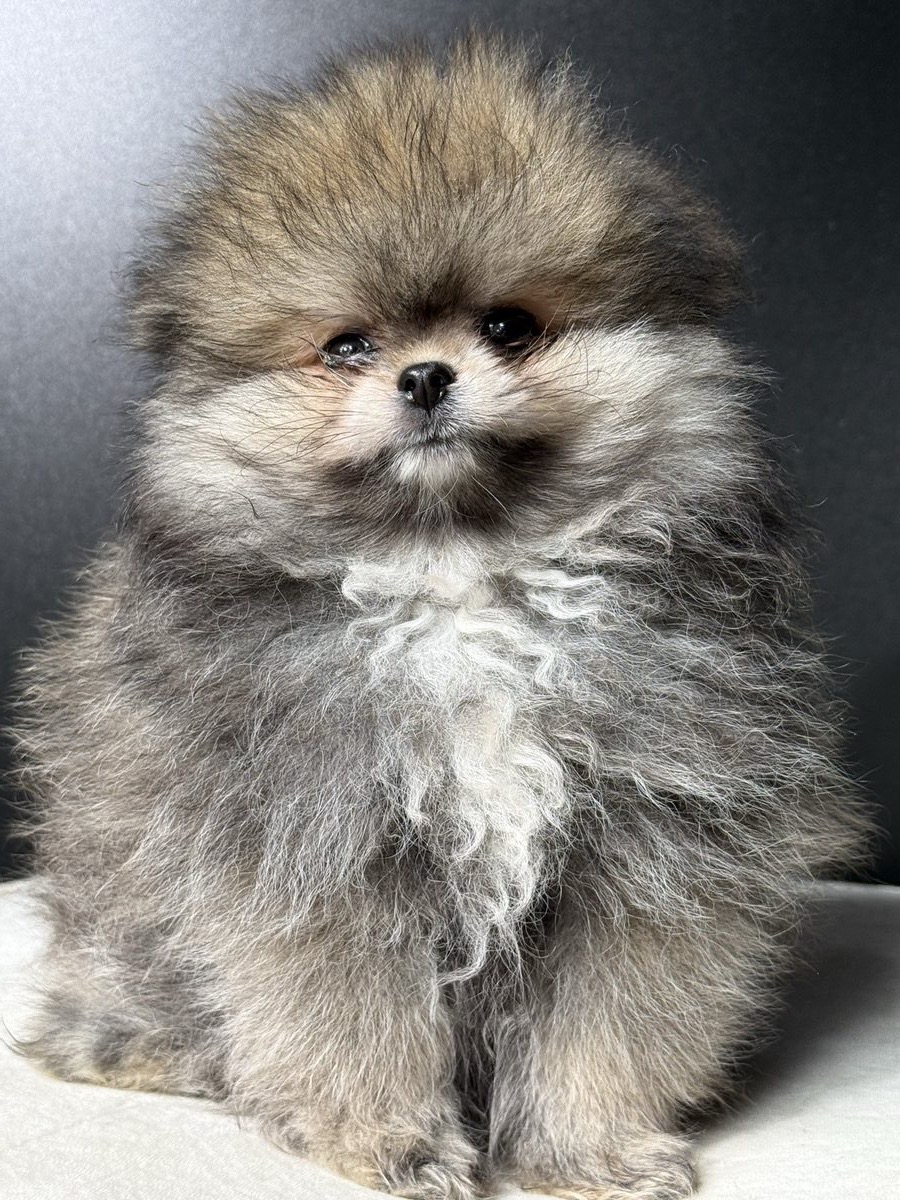
Odette
Female
CHF 1’800
Available
- EU pet passport
- ISO microchip
- Veterinary check
- Vaccinations
- Deworming
- Swiss import paperwork included
Swiss import duties extra; details before reservation.
Write on WhatsAppMeet our Pomeranians and talk with us personally about documents, visits and handover in Switzerland.
Pay in 4 installmentsWrite on WhatsAppFemale
CHF 1’800
Available
Swiss import duties extra; details before reservation.
Write on WhatsApp
Male
CHF 1’800
Available
Swiss import duties extra; details before reservation.
Write on WhatsAppA real centre, about 3 km from the Swiss border, near Como. Visits by appointment.
Blood and stool tests before departure, a final check the day before, medical record handed over with the puppy.
EU pet passport, ISO microchip, vaccinations, AMICUS and Swiss formalities: we guide you through every step.
Available through a financing partner, subject to approval. Learn more
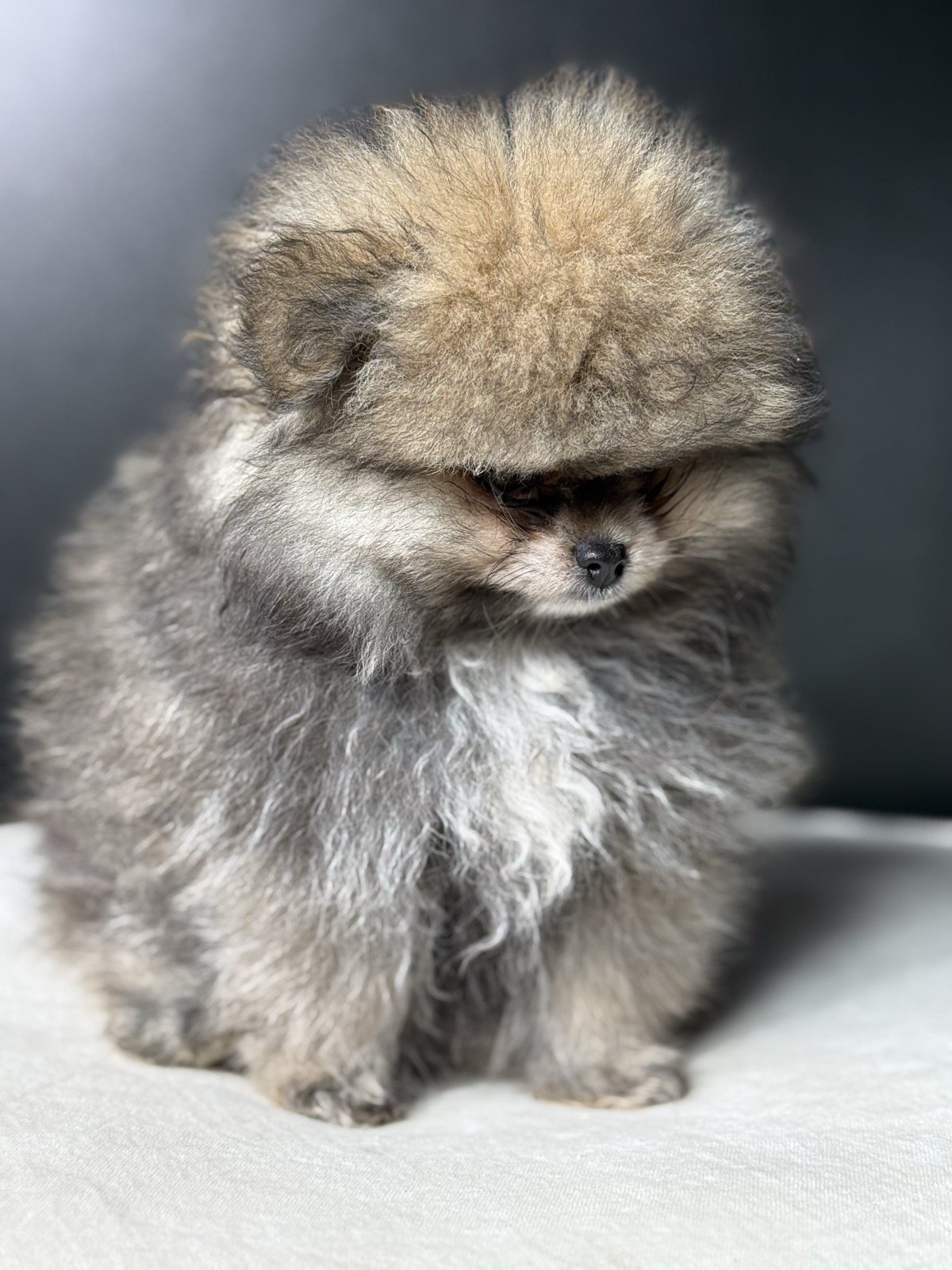
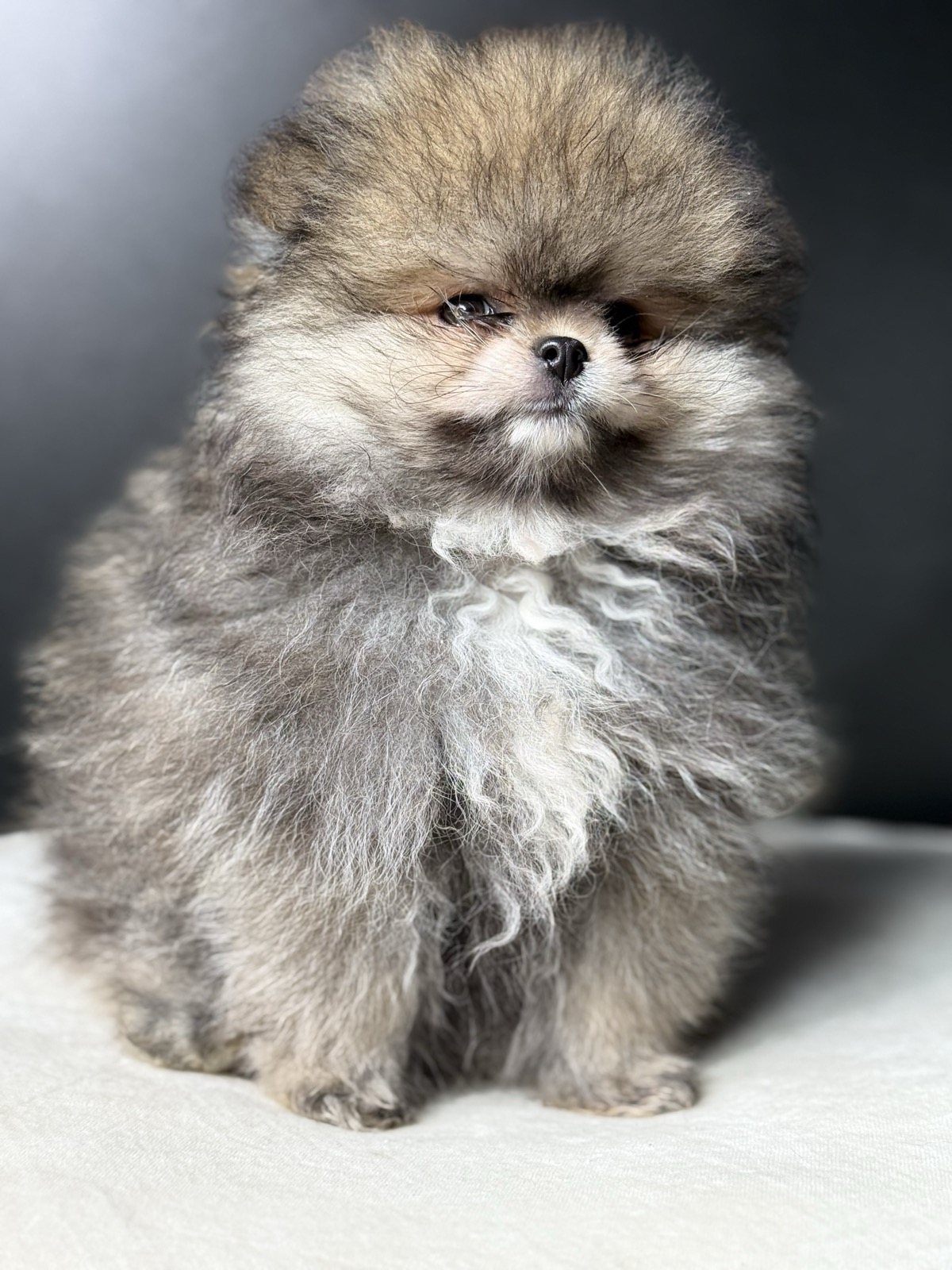
A video of every puppy
By appointment
The Pomeranian, internationally known by this name, belongs to the Spitz family. Beneath its little teddy-bear appearance is a lively, attentive dog that is very present in family life. Anyone interested in this breed should know that it is a real dog with a strong character, requiring consistent and affectionate training.
Descended from the Spitz dogs of northern Europe, the Pomeranian is alert and responsive. It notices everything happening around it and is happy to let you know, making it an attentive little watchdog. Learning to manage barking early on makes everyday life much easier, especially in a flat.
The Pomeranian seeks closeness to its caregivers and likes to take part in everything. It often follows its owners from room to room. This attachment is a lovely quality, but it should gradually learn to spend short periods alone so that absences do not distress it.
Clever and curious, it learns quickly, but also knows how to test boundaries. Short, playful, positive sessions with plenty of praise achieve much better results than a strict approach. Its small size should not mean the rules are forgotten: it needs the same guidance as a large dog.
Its small size allows it to adapt to many living situations. Regular walks, mental stimulation, and affectionate company every day remain essential.
The Pomeranian can live happily in a flat if it goes out several times a day and has enough to keep it occupied. Jumping down from sofas or beds and using stairs deserve attention in a small dog; ask your vet for advice.
It can be a cheerful companion for a family, provided children learn to handle it gently. A small dog can be injured if it falls or is carried clumsily. Play is best kept at floor level, under adult supervision, and its rest periods should be respected.
When well socialised, it generally gets along well with other dogs and cats. Around much larger dogs, it does not always appreciate its own size, so encounters should be supervised for its safety.
The Pomeranian is known for its abundant coat and wide variety of colours. This information concerns the breed in general and does not indicate the colours currently among available puppies. Details of each puppy are always discussed individually.
It has a dense, soft undercoat and a long, straight outer coat that forms a ruff around the neck. A puppy's coat changes considerably as it grows: its appearance as a puppy cannot predict exactly what it will look like as an adult.
Orange, cream, white, black, chocolate, sable, parti-coloured, and other variations exist. This diversity does not mean every colour is available at all times; each puppy's actual colour is shown on its profile.
This is a small, compact dog with a tail curled over its back. The adult size of a particular puppy depends on individual and genetic factors: we make no promises about adult size or weight.
Coat maintenance is central to life with a Pomeranian. Dental, eye, and claw care are also important, along with a structured daily routine that helps the dog feel secure.
Brushing several times a week prevents knots, especially behind the ears and under the legs. Shedding is considerable during moulting, when daily brushing becomes necessary. Close clipping is not recommended as it can damage coat regrowth; ask a groomer for advice.
Dental hygiene deserves particular attention in small breeds from an early age. Eyes and claws should also be checked regularly. If you notice redness, odour, or a change in behaviour, always consult a vet.
A diet suited to its age and meals at set times support its health. It is important not to skip meals with a small puppy. The quantity and composition should be decided with your vet.
Like every breed, the Pomeranian has health considerations that prospective owners should know about. Find out more on our health page; specific questions should always be discussed with a vet.
In small breeds, the kneecaps and trachea are areas to keep an eye on. Risk cannot be assessed from a photo or video. Use a harness rather than a collar for walks and ask your vet for advice. Even a carefully prepared puppy comes with no guarantee against later illnesses.
With its thick coat, it does not cope well with high temperatures. In summer, walk during cooler hours, keep water available, and never leave it in a car.
Preventive examinations help detect changes early. At the first sign of pain, coughing, limping, or a change in behaviour, ask your vet rather than waiting.
Pomeranian puppies are offered from CHF 1'800: the price of each puppy is shown on its catalogue card. This price excludes Swiss import VAT, which is charged additionally upon import, as stated in the existing catalogue. The price includes numerous services related to the preparation and responsible import of the puppy into Switzerland. Payment can be split into up to 4 instalments through a financial partner, subject to approval: see payment in instalments.
Included in each puppy's price are the EU pet passport, ISO microchip identification, a veterinary check, required vaccinations, and deworming. Additionally, the handling of the Swiss import is part of the service. These measures serve to bring the puppy to its new home well-prepared and health-checked.
The import is carried out considering the AMICUS system as well as relevant formalities regarding rabies protection, the TRACES system, and Swiss customs requirements. As each animal and each shipment can have individual requirements, specific details are always checked on a case-by-case basis and cannot be guaranteed identically for every puppy.
In addition to the stated price, Swiss import VAT is collected separately at the border. This corresponds to the current presentation in the catalogue and generally applies to all imported animals. Prospective owners should factor in this additional cost from the outset to avoid surprises.
Buying a puppy is a matter of trust. Particularly when importing from abroad, it is worth looking for transparency, traceable documentation, and clear communication. We explore these topics in our guide to buying a puppy responsibly in Switzerland.
A responsible puppy purchase is marked by complete paperwork, traceable information about origin, and open communication before the purchase. Questions about health, origin, and the process should always be answered. If anything is unclear, you can contact us directly and clarify outstanding points before making a decision.
A transparent process includes the EU pet passport, vaccination and deworming records, and microchip identification details. These documents accompany the puppy at handover and serve as evidence of the measures carried out. Further information on health matters is summarised on our health page.
“A puppy is not chosen from a photo: come and meet it, or call us by video.”
A microchip and registration in the Swiss dog database serve different purposes. The microchip identifies the dog, while AMICUS enables its registration and assignment to its owner. Clarify the process before arrival with your local authority and a Swiss veterinary practice. Our information on handover in Switzerland complements this discussion but does not replace official administrative advice.
Anyone owning a dog for the first time needs to have their owner registration entered correctly. Ask your local authority how to register your details. A dog imported from abroad must be entered in AMICUS by a Swiss veterinary practice. Bring the pet passport and all import documents so the microchip number and existing details can be checked together.
In addition to AMICUS, registration with your local authority, dog tax, and cantonal training rules may be relevant. Dog tax amounts and rules on leads or courses differ by place of residence. Check current information from your local and cantonal authorities so that the process is legally clear, rather than relying on general statements.
A puppy coming from Italy requires a legally compliant import process. Requirements depend, among other things, on age, origin, rabies vaccination status, and transport method. Discuss the specific dog and its documents before making a reservation. Through contact, you can gather your questions and then clarify the applicable conditions for your case with the competent authority.
The EU pet passport links the dog's identity to its recorded vaccinations. Check that the microchip number matches the animal and that vaccinations are documented in a traceable way. Rabies requirements include validity rules and potentially waiting periods; special provisions apply to young animals. Have the specific vaccination status checked by a vet and import conditions confirmed by the authorities, rather than relying solely on the handover date.
For cross-border transfers, veterinary documents and TRACES notifications are required depending on the type of import. Customs declarations are separate from these formalities. Ask which documents accompany your puppy, who is responsible for each step, and what taxes are payable. Our Import and Handover page is a starting point for reviewing these matters in writing before the journey.
The handover of a puppy is an important moment, organised with care. Details of the process, options, and arrangements can be found on our page about handover in Switzerland. In principle, handover is possible throughout Switzerland, with the specific arrangements agreed individually.
Handover can generally be arranged anywhere in Switzerland. Depending on your location and availability, different options can be discussed to make the journey as pleasant as possible for the new family. Exact dates and arrangements are agreed individually through a personal discussion.
You can visit the puppy by appointment at our dog centre in the Como region, about 3 km from the Swiss border. More information is available on the Como visit Switzerland page. This gives you a personal impression of the puppy before handover.
Each handover is planned individually, as distances, preferred dates, and personal circumstances vary. Getting in touch early helps find realistic dates and clarify outstanding questions in advance. Anyone with specific questions about arrangements can contact us at any time to discuss the details together.
The first days after handover are important for building trust between the puppy and its new family. Calm, patience, and a prepared home make this adjustment much easier and lay the foundations for a harmonious life together. A structured start helps the puppy adjust to unfamiliar sounds, smells, and daily routines. With a small puppy, regular meals and a warm, quiet place to sleep are particularly important in the first few days.
Before the puppy arrives, it is worth setting up a quiet retreat, providing suitable toys, and preparing safe places for food and bedding. Cables, toxic plants, and small objects that could be swallowed should be removed. A thoughtfully prepared environment reduces stress for the puppy and makes its first steps in its new home much easier.
During the first few days, the puppy should not be overwhelmed with too many impressions. Visits from friends or noisy parties can wait. Instead, calm routines, regular mealtimes, and plenty of patience help the puppy feel secure and build a trusting bond with its new family.
A prompt visit to a local vet is recommended to confirm the puppy's health and discuss questions about diet, vaccination schedules, or development. This appointment also offers the opportunity to establish a relationship with a nearby veterinary practice that can support the puppy in the future.
Consistent and affectionate training helps the Pomeranian grow into a balanced adult. Early socialisation with people, the environment, and other animals makes a significant contribution.
The Pomeranian learns quickly and loves rewards. Clear, consistent rules prevent it from setting its own priorities. Short, positive sessions work better than long, repetitive exercises.
New experiences help when introduced at an appropriate pace. Start with brief meetings and quiet places; if the puppy seems unsure, give it more space and try again later.
Naturally alert, it is quick to signal noises. Rewarding calm behaviour and avoiding reinforcement of barking with attention help achieve a good balance, which is important for life in a flat.
People interested in a Pomeranian often compare other small breeds. Our page about breeds provides an overview of other companions.
Both are small and lively. The Toy Poodle sheds very little, whereas the Pomeranian moults noticeably. Find out more on our Toy Poodle pages.
The Maltipoo is known for being particularly gentle and adaptable; the Pomeranian has a more alert and independent character. See our Maltipoo page.
The Pomeranian is a small, active dog that needs exercise and mental stimulation to remain balanced.
Several walks a day, suited to age and weather, are generally sufficient. It enjoys exploring and playing, but a puppy should not be overexerted.
Scent games, little tricks, and intelligence toys keep it occupied. A bored Pomeranian tends to bark more.
Orange, cream, white, black, chocolate, sable, parti-coloured, and other variations. This describes the breed in general; the colour of an available puppy is shown individually, and the coat continues to change as it grows.
It is a small breed. The actual size of a dog depends on individual factors and cannot be guaranteed; we make no promises about adult size or weight.
Yes, especially during moulting. Regular brushing is essential; close clipping is not recommended.
Yes, with daily walks and early work on barking. Take care with jumping and stairs for a small dog.
Yes, if children learn to handle it gently and under supervision, as a small dog can be injured in a fall.
Included are the EU pet passport, ISO microchip, a veterinary check, vaccinations, deworming, and handling of the Swiss import. Swiss import VAT is not included and is collected separately during import. Further details about the services can be requested at any time. These services ensure careful preparation of the puppy before handover and a reassuring start with its new Swiss family.
Yes, payment can be split into up to 4 instalments through a financial partner. Contact us before booking: approval is not guaranteed and remains subject to review. Details are on the payment in instalments page.
Yes, Swiss import VAT is not included in the stated price and is collected separately at the customs border. This corresponds to the presentation in the catalogue and generally applies to every imported puppy. This additional tax should be included in your budget planning from the outset to avoid surprises when finalising the purchase of your new companion.
The import takes into account the AMICUS system, rabies requirements, the TRACES system, and Swiss customs regulations. As each shipment may have specific requirements, the exact steps are clarified case by case rather than presented uniformly. Individual requirements vary according to the situation and are carefully checked to ensure legal compliance for each puppy import.
Age requirements depend on current import regulations and individual circumstances. There is therefore no universal minimum age that applies equally to every puppy. Details are discussed case by case to comply with all legal requirements. Binding guidance is provided only after reviewing the specific circumstances of the animal, to ensure a smooth and lawful transition to its new home.
Yes, by appointment, at our dog centre in the Como region near the Swiss border, or by video. Dates are arranged individually.
A quiet place to retreat, safe sleeping and feeding areas, and removing dangerous objects make the start easier. During the first few days, limit visitors so the puppy can settle calmly into its new environment. A prompt visit to the vet after arrival also supports a good start and helps ensure the puppy is settling into its new home under the best conditions.